Monday, 31 May 2010

"The best campaign ever"

The former British ambassador and connoisseur of Tashkent strip clubs Craig Murray famously stood against Jack Straw in the 2005 general election. Apparently still consumed with bitterness towards his former boss, Murray again weighed into the recent contest in Blackburn, backing an apparently “credible and impressive” independent candidate and even travelling to Lancashire to speak at an election event. True to form, Murray had identified someone with a weaker purchase on reality than himself in the form of deposit-losing embarrassment Bushra Irfan. Conor Pope’s hilarious dissection of her election leaflet is re-posted from The Audacity of Pope.

Sunday, 30 May 2010

A lesson from Germany

Having moved to Berlin last September, one of the things that took the most getting used to was the fact that, over here, Sundays are still respected.  Not only are shops closed, but it is illegal to mow the law, wash your car or to feed your cat in the garden.  Even the bottle banks have signs on them prohibiting use of them on a Sunday (and on any other designated "Ruhetag" (day of peace) for that matter).


Saturday, 29 May 2010

Alastair Campbell and the Lib-Dem Deserters

Owing to the death of the UKIP Candidate, the General Election in the Constituency of Thirst and Malton was pushed back to Thursday 27th May.  As unfortunate as it is, it still provides a very interesting method of gauging public sentiment towards the new Coalition Government after a few weeks of their being in office.

Friday, 28 May 2010

Not everyone's favourite Auntie

One of the prominent stories on the BBC Politics page today centres around a row between Number 10 and the producers of the BBC's "Question Time" programme.  The crux of the matter is that the Government refused to allow a Minister to appear on the programme if Labour spin-doctor, Alastair Campbell was to sit on the panel as Labour representative.


I shall start with a brief primer for my International readers who might not see what all this fuss is about.

Question Time is a weekly political show broadcast by the BBC.  It centres around topical debate with a panel of five; consisting of a representative of each of the three major political parties (Labour, Conservative and Lib Dem), and two non-partisan representatives.  The BBC itself (the British Broadcasting Corporation) is a public service broadcaster which operates under a mandate from the Queen.  It is funded via a TV License Fee which is payable by all UK citizens who use equipment to watch live broadcasts; the level of this fee is set by the Government.  Because of the way it is funded and operated, the BBC has a strict remit to be politically neutral; a remit which it is often accused of breaching.

Alastair Campbell is one of Labour's "star players".  Although he has not been elected by anyone he holds great power within the Labour Party in his position as strategist and spin-doctor.  He deals not with policy, instead manipulating the press in order to present the best public image for the party.

Given that this was the week of the Queen's Speech and therefore the debate would have, naturally, centred around the plans of the Coalition Government for the next eighteen months, I cannot see why the BBC would have asked a spin-doctor to represent the Labour Party rather than one of Labour's own front-benchers, who would have a much better grasp on matters of policy and would be much better placed to enter into constructive debate with a Conservative Minister.

I fully support the decision of Downing Street not to send a Minister, especially when the intentions of the BBC are so obvious.  It is clear, that by asking Campbell to represent the Labour Party, they were merely providing a stage for him to spout forth (again) about how many people have supposedly decided to join the Labour Party in the last week rather than provide any reasoned debate on Coalition policies.  That, and the fact that he has a new book out soon too...

If that wasn't enough, one of the "non-partisan" members of the panel was none other than well-known leftie and Labour supporter, Piers Morgan.  With those two appointments to the panel, any suggestion of political neutrality went straight out of the window and I commend the Conservative Party for having the guts to stand up to the BBC and say "no".

Of course, the backlash from the BBC (and Alastair Campbell) has already begun in earnest, with the BBC trying to take the moral high-ground by stating that they will not have terms dictated to them by the Government.  Surely though, this smacks of something to do with pots and kettles, with the BBC now effectively dictating terms to the Government.

In my mind, yes, the Government was dictating to the BBC.  Not terms, but merely reminding them of their duty to present a level political playing-field, and not just a mouthpiece for more Labour spin.

Over the next five years I sincerely hope that the Coalition will stand up to the BBC and bring an end to their years of acting as Labour's faithful lap-dog, and I hope that this first stand is a sign of things to come.

Sunday, 23 May 2010

The Craziness of the British Airways Strikes

Take a look on the BBC website today and you'll see the news that talks between Unite and British Airways have broken down (again!) and that a planned strike of cabin crew will go ahead as of Monday.  If your plans are going to be wrecked because of this, you have my sympathies.  The big question I must as is: "Do Unite really know what they're doing?".


The news of the upcoming strike comes as no surprise, especially seeing as the situation has been rumbling on for months with little sign of reaching a conclusion.  For once though, the situation doesn't appear to be clean-cut for either side.  Unite's allegations of poor pay and working conditions are being met with allegations (and proof) of ballot-rigging and unjustified claims; there are many out there (not just BA officials) who will admit that BA staff are amongst the higher-paid in the industry.

If you discount everything else though, and assume that the Union have a legitimate gripe, you still have to wonder whether or not they are going about things in the right way, or even whether the Union is serious about the negotiations it is entering in to.

As far as the intentions of the Union are concerned, you just have to look at today's news to see how seriously their chiefs are taking negotiations; sitting at the negotiating table Twittering updates from a confidential meeting is a sure-fire way to endear yourself to your opponents.

As well as that, a brief look at the accounts of British Airways should tell you all you need to know about why the cabin crew might not being paid as much as they'd like; over the last two years BA has posted a combined loss of almost £1bn... a sum which certainly isn't conducive to pay rises all round.

With this in mind, I really do have to question the suitability of the action that is being taken by the Union.  How do they expect to extract more money out of an ailing company by financially crippling them.  The logic would stun even a five-year-old:

Union:  We want more money
British Airways:  We've lost nearly £1bn in the last two years, we can't afford it
Union:  Well we'll strike and lose you even more money then
British Airways:  Then we'll be even less able to afford what you're demanding

If you can see the logic in this exchange, please do tell me!

According to reports on the internet, the upcoming fifteen-day strike will cost BA upwards of £100m; with under £2bn in the bank, this will be a serious hit to BA's finances and I would certainly advise against booking any flights in advance with them.

Will Unite be happy when they bring the company to its knees and end up far from well paid, but in fact at the back of the dole queue?

Thursday, 20 May 2010

A lesson from Norway (Part two)

Today marked the next step along the Coalition Causeway for the new Government, with the publication of their full plan for the next five years.  It lays bare the amount of compromises that have been made by David Cameron in order to secure the support of Nick Clegg and his party.  One of the u-turns that most disappoints me is David Cameron's decision to eschew his policy of repatriating a number of powers that have been handed over to the EU over the years.

I, like a large number of my fellow Conservatives, would label myself as Eurosceptic.  Whilst it cannot be argued that membership of the European Union does nothing for us, I am of the belief that we get out of it far less than we put in.  This is by no means a new set of circumstances; one of Margaret Thatcher's most famous actions was to go to Brussels in 1984 to say "I want my money back", successfully negotiating a rebate of more than £1bn a year from the EU.  (A rebate that was recently signed away in 2008, meaning that we now receive less money from the EU than any of the other 27 member-states).

To quote David Cameron, I want a situation whereby the UK is a part of Europe, in Europe but not ruled by Europe.

One of the biggest problems with the modern EU is the flawed Common Agricultural Policy.  This policy decides that having farmland in your country is a disadvantage and that such countries should be compensated.  This leads to the ludicrous situation whereby France receives almost twice the amount of money that the UK receives.  At the end of the day, all of this money has to come from somewhere.

The open borders policy also causes its own problems.  It is without doubt that the UK suffers from uncontrollable levels of immigration; the fact that this problem needs addressing was made clear by the policies on the matter that came from many parties.  However, the problem lies in the fact that the majority of this immigration is made up of EU Citizens; people we cannot turn away owing to our EU membership.

Of course, there are clear advantages; trade for example, and the reciprocal nature of the open borders policy.  The question is, then, is there a situation whereby we could pick and choose which elements of the EU we wish to enter in to.  The answer is yes.

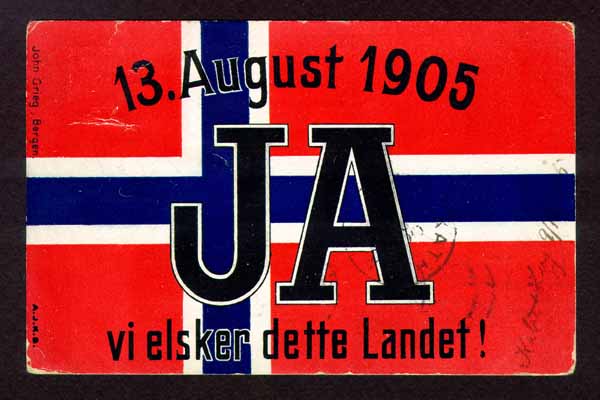
Here is where Norway comes in again:


"Yes, we love this country!"

Norway is a member of a much smaller group, the European Free Trade Association.  This operates parallel to the EU and is linked to it.  As a result, Norway enjoys all of the trade-related benefits of EU membership but without the extortionate costs.  Norway's only duty to the EU is to implement any regulations which relate to the running of the trade side of the EU.

This model is almost the exact same model that the UK signed up to in 1973.  Over the years, power has slowly drifted to the centre of the EU and continues to do so to this very day.  I firmly believe that if this is a system that has worked for us in the past and continues to work for a number of other European countries, then it is the system for us.

Surely it can't be coincidence that Norway looks so stunning and isn't an EU member... just look at Belgium!

Tuesday, 18 May 2010

A lesson from Norway (Part one)

Think of Norway and you often think of fjords, snow and not much else really.  Nine times out of ten, you wouldn't be far wrong; however there are a few things in Norway from which we English could learn a couple of lessons.  One of those things is the matter of the National Anthem...


It's a topic that crops up all over the place on a fairly regular basis; in newspapers, on TV, even in the House of Commons.  The question regarding our National Anthem is one that really doesn't seem to go away.  There is a large number of people (at least 55% according to a BBC poll) who would rather have something other than God Save the Queen as the National Anthem.

I, for one, agree with them.

Let's get things straight though, I am not advocating a complete renouncement of God Save the Queen; it is a cracking Anthem steeped in tradition and famous the world over.  However, the fact of the matter is that it is designated as the National Anthem of Great Britain and the Commonwealth.


If you go to any international sporting occasion around the British Isles (or even the forthcoming Commonwealth Games in India) you will see that England is the only nation within the Union that still uses GSTQ as its Anthem.  The Welsh have "Land of my Fathers"; the Scottish "Flower of Scotland" and the Northern Irish "Londonderry Air", however England still persists in using the Great British National Anthem.


It can't be for the lack of an appropriate song to take its place; both Jerusalem and Land of Hope and Glory have been used as replacements at times but have failed to provide England with a permanent Anthem.  Both are amazing and incredibly fitting tunes, and also have the propensity to create an awesome din when belted out by a 80,000-strong crowd.


Another option would be for England to have two National Anthems; adopting one of either Jerusalem or Land of Hope and Glory as an English National Anthem whilst retaining GSTQ as an Anthem for use on Royal or State occasions.

Far-fetched?

That's where Norway comes in, for that is precisely their stance on the situation.

So to conclude, here are the two candidates; but for me, it's Jerusalem by a nose!  Enjoy!


Jerusalem


Land of Hope and Glory

Monday, 17 May 2010

Breaking through in Scotland

Now that the dust has settled on the General Election, the analysis can begin.  The key point for discussion for the Conservatives is bound to be the question of where they could have done better and won the seats needed in order to form a majority government.  One of the main failings in this respect was the inability of the Party to win more than one seat in Scotland.


Ever since the Thatcher years Conservative performance in Scotland has been in perpetual decline, with the Conservative presence in Scotland falling to just one seat in 1997 and remaining that way ever since.

One cannot deny the fact that the Central Party as well as the Scottish Conservative Party have made enormous efforts in trying to rectify this situation.  This should have been enough, with a respectable number of Scottish seats falling inside the 116 easiest seats for the Conservatives to take in order to gain a majority in the House.

The question that needs to be asked, therefore, is what the Conservatives need to do in order to regain the trust of the Scottish people again.

It is painfully clear that the legacy of the Thatcher years has hit hardest in the north of the UK, in Scotland in particular, which has led to a large amount of not only anti-Thatcher, but anti-Tory sentiment in northern communities; Scotland in particular.  To this extent it has been well acknowledged that victory in the General Election was a vital step in the rebuilding of the party.  Five years in Government should be enough to show the electorate that the Conservatives are no longer the "nasty party" of old.

This idea, however, is only possible if there is a Conservative presence to highlight this aspect.  In Scotland this is sadly lacking.

ConservativeHome has come up with a solution to this problem; the creation of a separate Scottish Conservative Party along the same lines as the CSU/CDU model that works to such great effect here in Germany.

The premise is quite simple.  Whilst the CDU is the "mainstream" Conservative party in Germany, the CSU adopts a different ideology.  Seeing as they operate solely in Bavaria, it enables them to adapt their policies to suit the extreme conservatism of this Catholic heartland.  The two parties then have an agreement whereby they form a union in the Bundestag (not too unlike the Conservatives and the Ulster Unionist Party before the UUP lost its last seat in Northern Ireland).

The foundation of a distinct Scottish Conservative Party (or even just a resurrection of the old Scottish Unionist Party) would provide the opportunity for the Conservative Party to have an arm dedicated solely to the interests of Scottish voters and the tackling of Scottish issues whilst also offering a distinct antithesis to the SNP; almost being in a position to provide a clear and distinct go-to party for those who disagree with the increasing sentiment of Nationalism.

The message from the voters of Scotland is clear though.  In order to bring about change, change must first of all come from within.

Thursday, 6 May 2010

Why I'm voting Conservative today

Today is one of the biggest days that this country will face in a generation.  The decisions made by the people over the course of the next 15 hours will shape the future of Britain for the next five years (or longer).  I shall be voting for the Conservatives, and here's why:


My first real memory of politics comes from 2nd May 1997, when I was little more than nine years old.  I remember going into the daily assembly at St Helen's CP School in Ipswich, where Mr. Golding, the headmaster, explained to us that the country had a new Prime Minister, a certain Tony Blair (I remember wondering whether he was the same person as Lionel Blair!).  I remember thinking that "Labour" was a rather funny name for a party, what with the connotations of the word.  Not once did I think I'd be where I am today in a mere thirteen years time.

The 2001 General Election is a very vague memory too.  I remember there being a mock election at school (not that I remember who won), and that there was a chap called William Hague who wanted to take Mr. Blair's job.  Again, not much of a memory.

2005 is a lot clearer.  By this time I was starting to get a grip on politics and already knew my views.  I'd already had enough of Labour and willed Michael Howard on to win; disappointed that the election came just a year too early for me to have my say.  I remember feeling disappointed upon finding out the following day that Blair had hung on for another term, having been certain that his time was up.

And now today brings another such election.  However this year I know a lot more and will remember a lot more.  But it's not just what I will remember from today that counts, but what I remember from the last thirteen years.

I've watched a country go to pot, drowning in a sea of uncontrolled immigration, its leaders unwilling to do anything to close the floodgates.

I've watched the social fabric of society decay, policemen disappearing from our streets, violent crime rising uncontrollably with people afraid to leave their houses after dark.

I have seen a nation lose its national pride.  Whilst England was once a name to be proud of, it is now a showcase of all that is wrong with Europe.

I have watched the pound in my pocket tumble in value thanks to the Government's financial mismanagement; I remember when Berlin was cheap... not any more.

I have seen an army go to war on a lie.  I have sat and watched countless reports of young men like me dying as a result of a former Prime Minister's spinelessness.

I have seen an unelected Prime Minister sow the seeds for the predicament we now find ourselves in.  "An end to boom and bust", he said; he was wrong.

It is the Labour party that has got us into the mess which we find ourselves in today.  They know it, I know it, you know it.  They are a desperate party, resorting to lies, fear and fraud in order to cling on to power.  They inherited one of the strongest economies in the world; now we are just months away from passing around the begging bowl.  Should they really be rewarded for their failure?

The Liberal Democrats just don't add up.  Yes, their policies may sound promising but their manifesto was one written on the basis that they were going to be making up the numbers again; they never expected to have to deliver on their promises.  Yes, their plans on tuition fees are commendable, but at this point in time there are much better uses for public money.

For me there has always been only one choice in this election: David Cameron and the Conservative Party.

Yes, people may not like Mr. Cameron but they are not looking at the bigger picture.  He is the leader of a group of equally talented people who all want the same thing; to get Britain working again.  He and his party are deeply committed to each and every person in this country.  Not only are they Conservative, but they are conservative too.

Britain is broken; they will fix it.

Britain is on the dole queue; they will get it working again.

Britain is the sick man of Europe; they will get him up and fighting again.

They will fight for us... and we will win.

Wednesday, 5 May 2010

The Big Boundary Con (My Solution)

A little while back I blogged about the inherent unfairness in the UK's electoral system, based on the way in which the country's constituencies are laid out.  Back then I declared that I would present my own alternative "tomorrow"...


Apologies for the wait; as I've said before, the election campaign has been taking up vast amounts of my time.  Strange then, that I should find a good, uninterrupted hour or so on the eve of Polling Day!

As a Conservative, many people would be forgiven for believing that I do not support any form of proportional representation and will back First Past the Post to the hilt.  In a way, I disagree with Mr. Cameron on his assertions regarding electoral reform.

I believe that the system can be reformed in two steps:

A complete re-drawing of the boundaries
Mr. Cameron has pledged to cut the number of MPs by 50 should he become Prime Minister.  This would leave us with 600 MPs in a country of approximately 60,000,000 people.  This would be the perfect time to re-draw the boundaries to create much fairer constituencies whereby the share of the vote needed in order to return an MP is roughly the same.

Let's say, for argument's sake, 600 constituencies of 100,000 people each.

A re-vamp of the system
I agree that FPTP is massively unfair and can lead to stupid results.  You only have to take a look at one of my local constituencies (Norwich South), where a four-way fight is taking place to see this.  A party could be returned with as little as 25.1% of the popular vote; that is, just one in four people voting for them.  As well as this (as I mentioned in my previous post), we have the crazy situation whereby Labour can be the largest party with under 20% of the vote...

What I propose is keeping the First Past the Post system, but instead defining where "the post" lies; at 50.1% to be exact.  This could be achieved by using the Single Transferable Vote system.  This would mean that you would mark all of the candidates in preference order.  If no one candidate achieves 50.1% of the vote from first-preference votes, the votes of the last-placed candidate are re-distributed based on the second choice... and so on until someone achieves 50.1%.

So there you have it, my proposals for creating a fairer electoral system whilst retaining the key elements of first past the post.